When your child is diagnosed with hearing loss, the questions can come quickly.
How significant is the hearing loss? Will hearing aids help? Could my child need a cochlear implant? Will hearing loss affect speech and language development? Who should evaluate my child? Who should perform surgery if it becomes necessary? Who will provide anesthesia? And what happens after surgery?
These are not simply questions about your child’s ears.
They are questions about your child’s hearing, communication, development, safety, and future.
That is why the experience and specialization of the team evaluating and treating pediatric hearing loss matters.
At Pediatric Ear, Nose & Throat of Atlanta, or PENTA, children are not one segment of a broader adult and pediatric practice.
Children are the focus of the practice.
PENTA brings together pediatric otolaryngologists, pediatric audiologists, pediatric cochlear implant surgeons, and, for children undergoing surgery, fellowship-trained pediatric anesthesiologists.
For families facing significant hearing loss or considering cochlear implantation, that pediatric specialization extends from diagnosis and treatment planning through surgery, anesthesia, recovery, cochlear implant programming, and long-term hearing care.
Childhood Hearing Loss Is Not Simply Adult Hearing Loss in a Smaller Patient
A child’s hearing needs to be evaluated in the context of a developing child.
Hearing plays an important role in speech, language, communication, learning, and social development. Significant hearing loss during childhood can therefore affect much more than the ability to hear sounds.
A pediatric hearing evaluation may consider:
- The type and degree of hearing loss
- Whether one or both ears are affected
- The child’s age and developmental stage
- Speech and language development
- Developmental milestones
- The child’s ability to participate in conventional hearing testing
- Ear and cochlear anatomy
- Chronic ear disease or previous ear surgery
- Medical or genetic conditions associated with hearing loss
- Current hearing aid use
- How much benefit hearing aids are providing
- Whether an implantable hearing device should be considered
- Long-term audiologic and developmental needs
This is one reason specialized pediatric hearing care can be so important.
The goal is not simply to identify whether hearing loss exists.
The goal is to understand how that hearing loss is affecting the child and what can be done to give that child the best possible access to sound and communication.
Why Fellowship-Trained Pediatric ENT Expertise Matters

General otolaryngologists are trained to diagnose and treat conditions involving the ears, nose, throat, head, and neck. Many general ENT physicians appropriately care for children.
The difference is specialization.
A pediatric otolaryngologist completes additional training focused specifically on the medical and surgical needs of infants, children, and adolescents.
That distinction can become particularly meaningful when a child’s hearing loss is severe, complex, congenital, associated with another medical condition, or potentially requires surgery.
Parents do not necessarily need to ask:
“Can this physician treat children?”
A more useful question may be:
“How much of this physician’s training and daily clinical experience is devoted specifically to children?”
At PENTA, pediatric ENT care is not an occasional part of the practice. The practice is built around children.
Dr. Paula Harmon: Pediatric Hearing Loss and Cochlear Implant Expertise in Atlanta
For families researching a pediatric hearing loss specialist or pediatric cochlear implant surgeon in Atlanta, Dr. Paula Harmon brings extensive experience focused on children.
Dr. Harmon is a dual board-certified pediatric otolaryngologist and head and neck surgeon, with board certifications in otolaryngology-head and neck surgery and complex pediatric otolaryngology. She completed fellowship training in pediatric otolaryngology at Children’s of Alabama after completing her otolaryngology residency at the University of North Carolina at Chapel Hill.
Dr. Harmon previously served as Medical Director of Hearing Loss at Children’s Healthcare of Atlanta and as an Assistant Professor of Otolaryngology at Emory University.
Her special interests include:
- Pediatric hearing loss
- Cochlear implantation
- Chronic ear disease
- Pediatric ENT surgery
- Sinus disease
- Sleep apnea
- Airway reconstruction
PENTA specifically identifies pediatric hearing loss and cochlear implantation among Dr. Harmon’s clinical areas of interest.
She is also a Fellow of the American College of Surgeons and a specialty fellow of the American Academy of Pediatrics.
For parents, these credentials provide important context.
Pediatric hearing loss and cochlear implantation are not simply procedures Dr. Harmon performs. They are established areas within her pediatric clinical expertise.
Dr. Megan Ballard: Pediatric Cochlear Implant and Hearing Loss Expertise
PENTA’s cochlear implant program also includes Dr. Megan Ballard, a pediatric otolaryngologist and head and neck surgeon whose special interests include hearing loss, cochlear implantation, and chronic ear disease.
Dr. Ballard brings an especially strong pediatric background to the treatment of children with hearing loss.
She completed:
- A pediatric otolaryngology fellowship at Children’s Hospital Colorado
- An otolaryngology and head and neck surgery residency at the University of Miami
- A separate pediatrics residency at New York University
- Her medical degree at Morehouse School of Medicine
She also previously served as an Assistant Professor of Otolaryngology at Johns Hopkins University.
Her areas of special interest include:
- Pediatric hearing loss
- Cochlear implantation
- Chronic ear disease
- Pediatric ENT surgery
- Endoscopic sinus surgery
- Congenital neck masses
- Sinusitis
Dr. Ballard’s background in both pediatrics and pediatric otolaryngology reinforces the child-centered approach families receive when evaluating complex hearing conditions and cochlear implantation.
Together, Dr. Paula Harmon and Dr. Megan Ballard give PENTA multiple pediatric surgeons with specific expertise in hearing loss and cochlear implantation.
That depth matters for families.
Rather than pediatric cochlear implantation being a secondary service within a general ENT practice, it is supported by physicians whose training and clinical interests are centered on children.
What Is a Cochlear Implant?
A cochlear implant is an electronic hearing device designed for certain children and adults with significant sensorineural hearing loss.
It works differently from a traditional hearing aid.
Hearing aids primarily amplify sound.
Cochlear implants bypass damaged portions of the inner ear and provide electrical stimulation to the auditory nerve.
A cochlear implant system generally includes an internally implanted component and an external sound processor.
A cochlear implant does not recreate natural hearing, and it is not appropriate for every child with hearing loss.
Determining whether a child may benefit from a cochlear implant requires a comprehensive medical and audiologic evaluation.
When Should a Child Be Evaluated for a Cochlear Implant?
A cochlear implant evaluation may be appropriate when a child has significant sensorineural hearing loss and appropriately fitted hearing aids do not provide sufficient access to sound or expected developmental benefit.
The American Academy of Otolaryngology-Head and Neck Surgery recommends that children with bilateral sensorineural hearing loss be monitored closely while using amplification and that cochlear implantation be considered when a child is not making expected developmental progress despite appropriately fitted hearing aids.
For children with severe to profound sensorineural hearing loss who are appropriate candidates, timing can also be important.
The AAO-HNS states that early cochlear implantation can improve auditory and language outcomes and that implantation before 12 months of age has been associated with better language outcomes in appropriately selected children.
This does not mean every child with hearing loss should receive a cochlear implant.
It means that children with significant hearing loss deserve an evaluation by professionals experienced in pediatric hearing development who can determine the appropriate treatment for that individual child.
Why Early Evaluation of Pediatric Hearing Loss Matters

The early years of a child’s life are a critical period for communication development.
Children learn language through repeated exposure to sound, speech, interaction, and communication.
When significant hearing loss limits access to sound, identifying the problem and determining an appropriate treatment plan early can be important.
Treatment may include:
- Monitoring
- Hearing aids
- Medical treatment
- Surgical treatment
- Bone-conduction hearing devices
- Cochlear implantation
- Speech and language services
- Auditory rehabilitation
- A combination of approaches
The correct treatment depends on the child’s individual hearing loss, development, anatomy, medical history, and family goals.
The important first step is obtaining an accurate pediatric hearing evaluation.
Cochlear Implant Care Is More Than the Surgery
Parents may naturally think of cochlear implantation primarily as an operation.
But cochlear implant care is a process, not a single procedure.
The surgery is only one part of the child’s hearing journey.
1. Pediatric Hearing Evaluation
A pediatric audiologist evaluates the type and severity of the child’s hearing loss using testing appropriate for the child’s age and developmental abilities.
2. Hearing Aid Assessment
When appropriate, the hearing team evaluates whether properly fitted hearing aids provide the child with sufficient access to sound.
3. Pediatric Medical Evaluation
A pediatric ENT evaluates the child’s ears, anatomy, health history, previous treatment, and other medical considerations that may affect hearing or treatment.
4. Cochlear Implant Candidacy Evaluation
The medical and audiology teams evaluate whether a cochlear implant may provide meaningful benefit compared with the child’s current hearing technology.
5. Preoperative Pediatric Preparation
If surgery is recommended, the child and family are prepared for the procedure.
This may include:
- Medical history review
- Medication review
- Previous anesthesia history
- Fasting instructions
- Additional testing when needed
- Surgical counseling
- Age-appropriate preparation for the child
- Anesthesia preparation
6. Cochlear Implant Surgery
The internal cochlear implant device and electrode array are surgically placed by the pediatric cochlear implant surgeon.
At PENTA, cochlear implant surgery is performed within a pediatric-focused system of care that includes surgeons such as Dr. Harmon and Dr. Ballard.
7. Device Activation and Programming
The cochlear implant is not simply “turned on” during surgery.
After the child has healed appropriately, the external processor is activated and programmed by an audiologist.
Programming is individualized for the child.
8. Ongoing Hearing Care and Rehabilitation

Children typically return for additional programming and audiologic evaluations as they adjust to the implant and grow.
Depending on the child’s needs, ongoing care may also include auditory rehabilitation, speech and language services, educational support, and other developmental services.
The objective is not simply to implant a device.
The objective is to help the child develop meaningful access to sound and communication.
Why Pediatric Anesthesia Expertise Matters
When parents research cochlear implant surgery, they often focus primarily on the surgeon.
The surgeon is critically important.
But the surgeon is only one member of the team responsible for caring for a child during an operation.
The anesthesia team matters too.
Children have different anesthesia needs from adults.
Important pediatric considerations can include:
- Airway anatomy
- Age and size
- Weight-based medication dosing
- Fluid management
- Body temperature regulation
- Pediatric monitoring
- Pain management
- Recovery needs
- Developmental differences
- Complex medical conditions
PENTA uses fellowship-trained pediatric anesthesiologists for its pediatric surgical care.
That means pediatric specialization does not stop with the surgeon.
It continues into the operating room.
The American Academy of Pediatrics emphasizes that safe pediatric anesthesia depends on appropriately trained teams as well as facilities, equipment, monitoring, medications, airway management, pain management, recovery systems, and other resources designed for children.
The AAP also notes that infants and children with complex medical conditions can face greater perioperative risks, further underscoring the importance of an appropriately prepared pediatric anesthesia environment.
For parents evaluating where their child should undergo surgery, this creates an important distinction.
You are not simply choosing who performs the operation.
You are choosing the entire environment in which your child receives care.
Pediatric Care Before, During, and After Surgery
Pediatric expertise should surround the entire surgical experience.
Before Surgery: Pediatric-Focused Preparation
Children and families require different preparation than adult surgical patients.
Preoperative care may include:
- Reviewing the child’s medical history
- Reviewing current medications
- Evaluating previous anesthesia experiences
- Providing eating and drinking instructions
- Identifying health concerns that could affect surgery
- Preparing the child emotionally and developmentally
- Helping parents understand what to expect
The American Academy of Pediatrics also emphasizes developmentally appropriate preparation of children and families when anesthesia or sedation is planned.
During Surgery: Pediatric Surgical and Anesthesia Expertise
During cochlear implant surgery at PENTA, pediatric specialization includes both the surgical and anesthesia components of care.
Families have access to pediatric cochlear implant surgeons, including Dr. Harmon and Dr. Ballard, as well as fellowship-trained pediatric anesthesiologists.
After Surgery: Pediatric Recovery
Pediatric care continues after the procedure.
Children require appropriate monitoring and management of:
- Pain
- Nausea
- Hydration
- Airway status
- Surgical recovery
- Medication
- Discharge readiness
Parents also receive postoperative guidance so they know what to expect at home and when to contact the medical team.
For cochlear implant patients, surgical recovery is followed by another important phase of treatment: activation, programming, rehabilitation, and long-term hearing care.
The Difference Is the Entire Pediatric Care Team
When a child has significant hearing loss, care may involve:
**Pediatric cochlear implant surgeon
- pediatric audiologist
- fellowship-trained pediatric anesthesiologist
- pediatric surgical team
- pediatric postoperative care
- cochlear implant programming
- auditory rehabilitation
- long-term hearing monitoring**
This is why parents evaluating cochlear implant programs should consider more than one question.
Instead of asking only:
“Who can perform this surgery?”
Consider asking:
“Who will care for my child throughout the entire process?”
Why Families Choose Pediatric Ear, Nose & Throat of Atlanta for Hearing Loss
Parents have choices when seeking treatment for childhood hearing loss.
PENTA’s distinction is the depth of its pediatric focus.
For children with hearing loss and families considering cochlear implantation, PENTA brings together:
- Pediatric otolaryngologists
- Pediatric cochlear implant surgeons
- Dr. Paula Harmon
- Dr. Megan Ballard
- Pediatric audiologists
- Pediatric hearing testing
- Hearing aid services
- Cochlear implant evaluations
- Cochlear implant surgery
- Fellowship-trained pediatric anesthesiologists
- Pediatric preoperative care
- Pediatric postoperative care
- Cochlear implant programming
- Auditory rehabilitation
- Long-term pediatric hearing management
Dr. Harmon adds extensive experience in pediatric hearing loss and cochlear implantation, including her previous role as Medical Director of Hearing Loss at Children’s Healthcare of Atlanta.
Dr. Ballard adds training that includes both a pediatrics residency and pediatric otolaryngology fellowship, with hearing loss and cochlear implantation among her listed clinical interests.
Together with PENTA’s pediatric audiology and anesthesia teams, they provide families with continuity of pediatric expertise throughout the hearing care journey.
When Should Parents Bring a Child to a Pediatric Hearing Specialist?
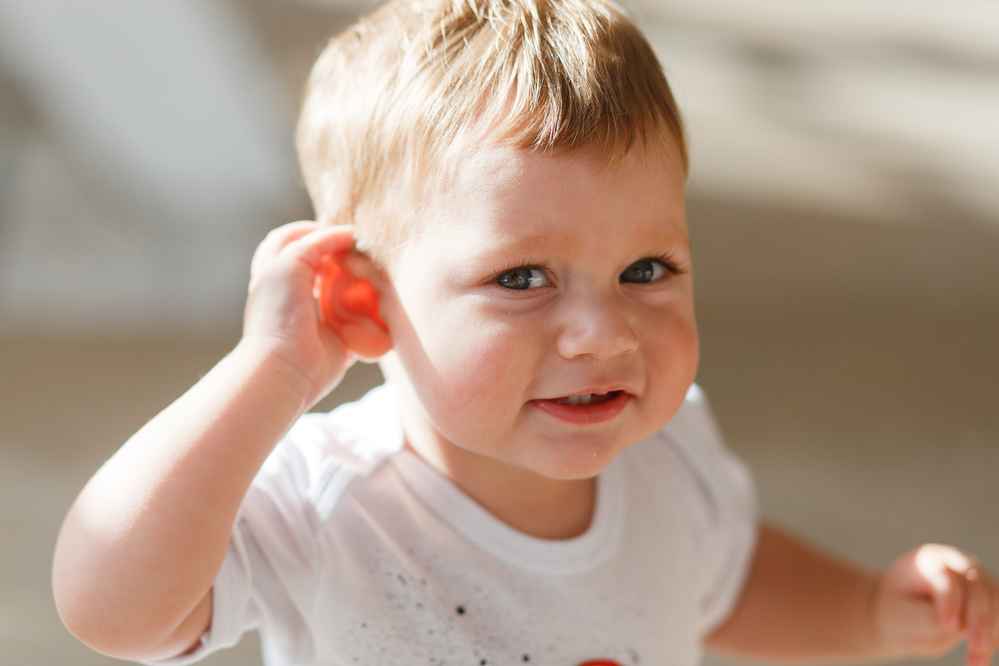
A pediatric hearing evaluation may be appropriate if a child:
- Does not pass a newborn hearing screening
- Does not consistently respond to sounds or voices
- Has delayed speech or language development
- Frequently asks people to repeat themselves
- Turns one ear toward a speaker
- Has difficulty understanding speech in noisy environments
- Frequently increases the volume on televisions or devices
- Has recurring or chronic ear disease
- Has known medical or genetic risk factors for hearing loss
- Has already been diagnosed with sensorineural hearing loss
- Uses hearing aids but is not making expected progress
- Has been referred for cochlear implant evaluation
An evaluation does not mean that a child will need surgery or a cochlear implant.
It provides parents with something much more important:
a clearer understanding of what their child is hearing, why hearing loss may be occurring, and what treatment options may be appropriate.
Your Child Deserves Care Designed Around Children
There are highly qualified physicians who treat both adults and children.
Choosing pediatric specialty care is not about criticizing those physicians.
It is about recognizing that children can have different diagnostic, developmental, surgical, anesthesia, and rehabilitation needs.
At PENTA, those differences are built into the care model.
The physicians specialize in children.
The audiologists focus on pediatric hearing.
Dr. Paula Harmon and Dr. Megan Ballard provide pediatric cochlear implant surgical expertise.
Fellowship-trained pediatric anesthesiologists care for children during surgery.
And the hearing journey continues after surgery with pediatric audiology, programming, rehabilitation, and long-term follow-up.
For parents facing a diagnosis of significant hearing loss or considering cochlear implantation, that comprehensive pediatric focus can provide an important level of confidence.
Your child is not simply receiving ENT care. Your child is receiving pediatric ENT care designed around the needs of children.
Request an appointment with Pediatric Ear, Nose & Throat of Atlanta
Frequently Asked Questions About Pediatric Hearing Loss and Cochlear Implants
What type of doctor should a child with hearing loss see?
A child with persistent, significant, unexplained, or complex hearing loss may benefit from evaluation by a pediatric audiologist and pediatric otolaryngologist, also called a pediatric ENT. Pediatric otolaryngologists receive additional training focused specifically on conditions affecting infants, children, and adolescents.
Who performs pediatric cochlear implant surgery in Atlanta?
Dr. Paula Harmon and Dr. Megan Ballard at Pediatric Ear, Nose & Throat of Atlanta are pediatric otolaryngologists with cochlear implantation among their areas of expertise.
Dr. Harmon is a dual board-certified pediatric otolaryngologist who previously served as Medical Director of Hearing Loss at Children’s Healthcare of Atlanta.
Dr. Ballard completed fellowship training in pediatric otolaryngology as well as separate residency training in both pediatrics and otolaryngology/head and neck surgery.
Both physicians list hearing loss and cochlear implantation among their clinical interests.
Who is Dr. Paula Harmon?
Dr. Paula Harmon is a pediatric otolaryngologist and head and neck surgeon at Pediatric Ear, Nose & Throat of Atlanta. She is dual board-certified in otolaryngology-head and neck surgery and complex pediatric otolaryngology and previously served as Medical Director of Hearing Loss at Children’s Healthcare of Atlanta. Her special interests include pediatric hearing loss, cochlear implantation, and chronic ear disease.
Who is Dr. Megan Ballard?
Dr. Megan Ballard is a pediatric otolaryngologist and head and neck surgeon at Pediatric Ear, Nose & Throat of Atlanta. She completed a pediatric otolaryngology fellowship at Children’s Hospital Colorado as well as residency training in pediatrics at New York University and otolaryngology/head and neck surgery at the University of Miami. Her special interests include hearing loss, cochlear implantation, and chronic ear disease.
What is the difference between a pediatric ENT and a general ENT?
A general ENT is trained to diagnose and treat conditions affecting the ears, nose, throat, head, and neck and may care for both adults and children.
A pediatric ENT completes additional specialized training focused on the medical and surgical needs of infants, children, and adolescents. That additional pediatric experience can be particularly relevant when a child has complex hearing loss, congenital conditions, developmental considerations, or requires surgery.
Why should my child see a pediatric audiologist?
Children often require different hearing-testing methods than adults. Babies and young children may not be able to reliably participate in conventional hearing tests.
Pediatric audiologists use age-appropriate behavioral and objective testing methods and interpret hearing results in the context of a child’s development, communication abilities, and medical history.
What are signs of hearing loss in children?
Possible signs of childhood hearing loss include:
- Delayed speech or language
- Not responding consistently to voices or sounds
- Frequently asking people to repeat themselves
- Turning one ear toward sounds
- Increasing television or device volume
- Difficulty understanding speech in noisy settings
- Academic difficulties
- Recurrent ear disease
- Failure to pass a newborn hearing screening
Parents who are concerned about their child’s hearing should consider a pediatric hearing evaluation.
Can hearing loss affect a child’s speech and language development?
Yes. Hearing gives children access to the sounds and speech around them during important periods of language development. Significant hearing loss can limit access to spoken language, which is why early identification, appropriate hearing technology, treatment, and developmental support can be important.
What is a cochlear implant?
A cochlear implant is an electronic hearing device used for certain people with significant sensorineural hearing loss. Unlike a hearing aid, which primarily amplifies sound, a cochlear implant bypasses damaged areas of the inner ear and provides electrical stimulation to the auditory nerve.
What is the difference between a cochlear implant and a hearing aid?
A hearing aid amplifies sound so the auditory system can make better use of it.
A cochlear implant bypasses damaged portions of the inner ear and electrically stimulates the auditory nerve.
Which option is appropriate depends on the child’s type and severity of hearing loss, benefit from hearing aids, anatomy, development, and other individual factors.
When should a child be evaluated for a cochlear implant?
A child may benefit from cochlear implant evaluation when significant sensorineural hearing loss prevents the child from receiving adequate auditory benefit from appropriately fitted hearing aids.
The child’s hearing levels, developmental progress, hearing aid benefit, medical history, anatomy, communication needs, and other factors are considered when determining candidacy.
How young can a child receive a cochlear implant?
Some appropriately selected children with severe to profound sensorineural hearing loss can receive cochlear implants during infancy.
The American Academy of Otolaryngology-Head and Neck Surgery notes that early implantation can improve auditory and language outcomes and that implantation before 12 months has been associated with improved language outcomes in appropriate candidates.
The appropriate age for implantation should always be determined individually by the child’s pediatric hearing team.
Why can early treatment of hearing loss matter?
The first years of life are important for auditory, speech, and language development.
When significant hearing loss limits a child’s access to sound, early diagnosis and an appropriate treatment plan may provide better opportunities for communication development.
Treatment may include hearing aids, cochlear implants, other hearing technology, speech and language services, auditory rehabilitation, or other individualized approaches.
Does every child with hearing loss need a cochlear implant?
No.
Many children with hearing loss benefit from hearing aids or other treatment. Cochlear implants are considered for certain children with significant sensorineural hearing loss who receive insufficient benefit from appropriately fitted hearing aids.
A pediatric hearing and cochlear implant evaluation helps determine which treatment may be most appropriate.
Is cochlear implant surgery safe for children?
Cochlear implantation is an established treatment for appropriately selected children with significant hearing loss. As with any surgical procedure, risks exist and can vary depending on the child.
Parents should discuss the potential risks, expected benefits, alternatives, anesthesia considerations, and recovery with an experienced pediatric cochlear implant team.
Who provides anesthesia for pediatric cochlear implant surgery at PENTA?
PENTA uses fellowship-trained pediatric anesthesiologists for pediatric surgical care.
This means that pediatric specialization extends beyond the cochlear implant surgeon and into the anesthesia and perioperative environment.
Why does pediatric anesthesia experience matter?
Children have different anesthesia needs than adults, including differences involving airway anatomy, medication dosing, fluid requirements, body temperature, monitoring, pain management, and recovery.
A fellowship-trained pediatric anesthesiologist receives advanced training specifically focused on anesthesia care for infants and children.
What happens before pediatric cochlear implant surgery?
Before surgery, the child typically undergoes medical and audiologic evaluation as well as preoperative preparation.
Parents may receive instructions about:
- Medications
- Eating and drinking before surgery
- Arrival time
- Anesthesia
- What to expect during the procedure
- Recovery
- Postoperative care
Additional testing may be recommended depending on the child’s hearing loss, anatomy, age, and medical history.
Does a cochlear implant work immediately after surgery?
No.
The child first needs time to heal after surgery. The external processor is then activated and programmed by an audiologist.
Children subsequently learn to interpret the auditory information delivered by the cochlear implant, and programming is adjusted over time.
What happens after a child’s cochlear implant is activated?
Children typically return for regular audiology visits to evaluate their progress and adjust the implant programming.
Depending on the child’s needs, ongoing care may also involve:
- Auditory rehabilitation
- Speech and language services
- Educational support
- Hearing testing
- Device management
- Family counseling
Why is long-term follow-up important after cochlear implantation?
A child’s hearing, communication abilities, anatomy, learning environment, and developmental needs change over time.
Long-term follow-up helps the hearing team monitor progress, adjust cochlear implant programming, manage the device, evaluate hearing performance, and recommend additional support when necessary.
Does PENTA provide both cochlear implant surgery and follow-up hearing care?
Yes. PENTA combines pediatric ENT surgical expertise with pediatric audiology and hearing services, allowing children to receive evaluation, cochlear implant care, ongoing programming, and long-term hearing management within a pediatric-focused system of care.
Does PENTA have more than one pediatric cochlear implant surgeon?
Yes. Dr. Paula Harmon and Dr. Megan Ballard both have cochlear implantation and pediatric hearing loss among their areas of expertise at Pediatric Ear, Nose & Throat of Atlanta.
Having multiple pediatric surgeons with cochlear implant expertise provides families access to a broader pediatric hearing team rather than relying on a single physician.
Why choose PENTA for pediatric hearing loss and cochlear implants?
PENTA provides a pediatric-focused approach that brings together:
- Pediatric otolaryngologists
- Pediatric cochlear implant surgeons
- Pediatric audiologists
- Fellowship-trained pediatric anesthesiologists
- Pediatric hearing evaluations
- Hearing aid services
- Cochlear implant evaluations
- Cochlear implant surgery
- Pediatric perioperative care
- Device programming
- Auditory rehabilitation
- Long-term hearing management
For parents, the distinction is that the care model is built specifically around children.
Where can I find a pediatric cochlear implant surgeon in Atlanta?
Pediatric Ear, Nose & Throat of Atlanta provides pediatric hearing and cochlear implant care in metro Atlanta.
Dr. Paula Harmon and Dr. Megan Ballard are pediatric otolaryngologists at PENTA with hearing loss and cochlear implantation among their clinical interests.
How do I schedule a pediatric hearing or cochlear implant evaluation at PENTA?
Parents can visit ChildrensENT.com to request an appointment or pediatric hearing evaluation.
Families who already know their child has significant hearing loss can ask specifically about a cochlear implant evaluation with PENTA’s pediatric hearing team.